

You Only Hear the Rep's Version of the Call
Every sales appointment ends with the rep telling you how it went. That report has one obvious problem: they're the one being graded on it.
The rep is grading their own appointment
The only account you get of how a sales call went usually comes from the person whose numbers depend on it sounding good.
A quiet objection never gets reported
If a prospect hesitated on price or trust and never said it out loud, that moment does not make it into anyone’s debrief.
Patterns only show up after the damage is done
By the time a close rate slips, you are looking at a trend, not the call that caused it. Nobody can tell you which appointment to go back and fix.
A Stranger Gets a Straighter Answer Than the Rep Does
This is the whole idea behind a QC call, so it's worth spelling out properly.
Ask a customer how the appointment went, and most people will tell the person who was in the room what they think that person wants to hear. Politeness costs nothing, and telling a rep to their face that the pitch didn’t land costs an awkward moment nobody wants. That’s not a flaw in your customers. It’s just how people behave when the person asking has something riding on the answer.
A QC call breaks that dynamic. The caller wasn’t on the appointment, isn’t being measured on it, and isn’t going to see the rep tomorrow. There’s nothing to protect by being honest, so people generally are.
The answer that comes back isn’t always dramatically different from what the rep reported. Sometimes it confirms it exactly. What changes is that you now know which account is the true one, instead of assuming the rep’s read was the honest one by default.
What the call actually sounds like
“Did you feel that Dylan took the time to understand your needs before making a recommendation? Did he care?”
What a Sales Manager Does With the Read
The call itself is only half the system. The other half is what you do with what comes back.
Coach the pattern, not the anecdote
One QC call is a data point. A run of them across a week or a month tells you whether a particular objection, price point or pitch step is costing you the same way every time.
Protect a good closer’s reputation
Sometimes a deal falls over because the prospect misunderstood the offer, not because the rep did anything wrong. Knowing which one it was changes how you coach it, and whether you coach it at all.
Catch what the rep never thought to mention
A throwaway comment about a competitor, a timing issue, or a price that felt steep often only comes out when someone other than the rep asks the question.
Build an honest coaching record
Instead of a coaching conversation built on a gut feel or a single complaint, you get a running record of how appointments are actually landing, appointment by appointment.
Built on a Method, Not a Guess
Learned, not improvised
The questions behind this call are the quality-control call Dylan paid thousands to learn from Australia’s number one sales coach, packaged and tuned into a system Optiphone can run for you.
Tuned to your team
The call is built around how your appointments actually run, not a generic script. You decide what it asks about and which appointments it calls.
Fits alongside your other systems
QC calls run on the same engine as Optiphone Reception, so it plugs in without a separate platform to learn.
You Do Not Have to Take Anyone's Word for It
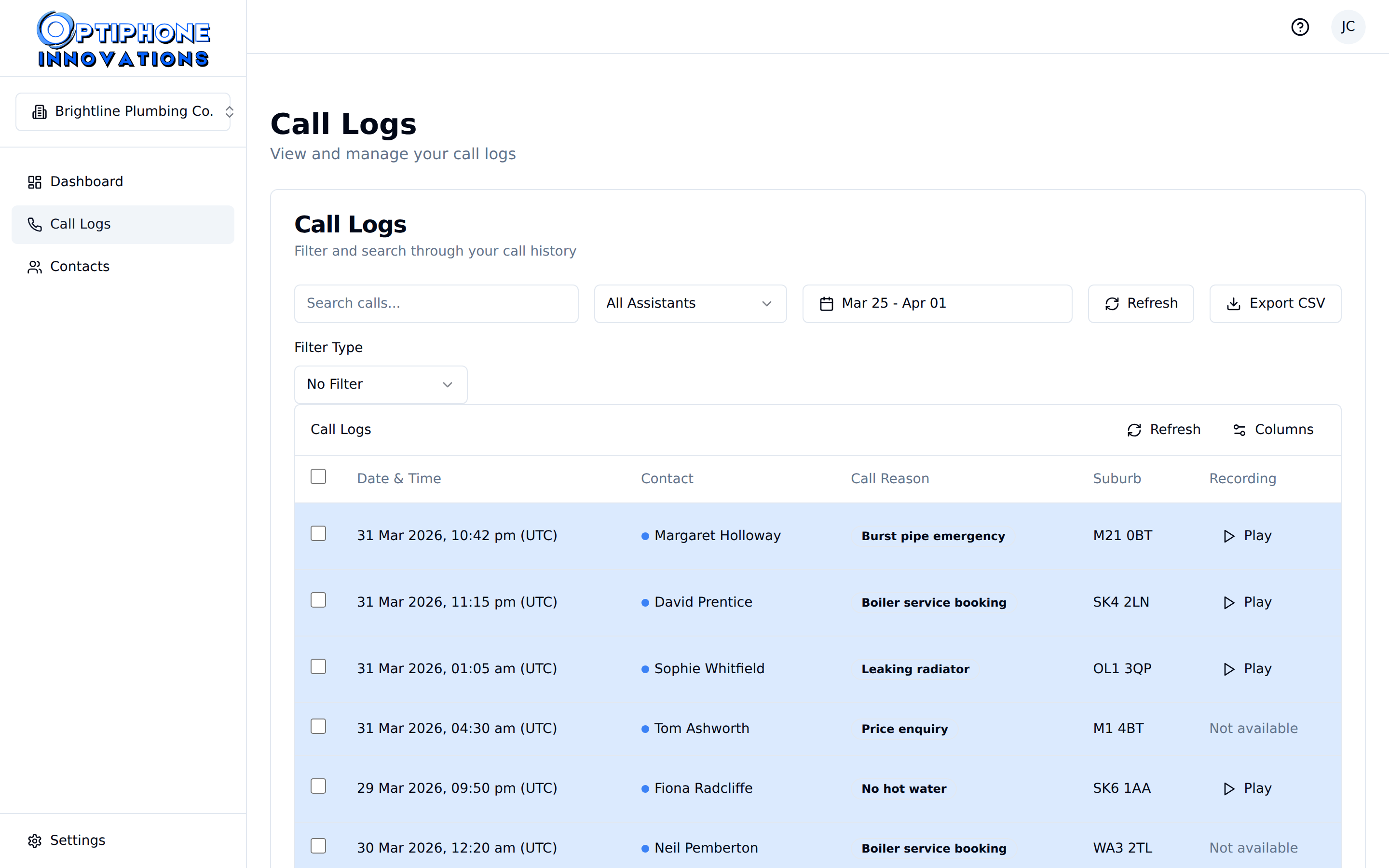
Every QC call lands in the same place as the rest of your calls, recorded and transcribed. When the read and the rep's version of the appointment disagree, you can settle it by listening.
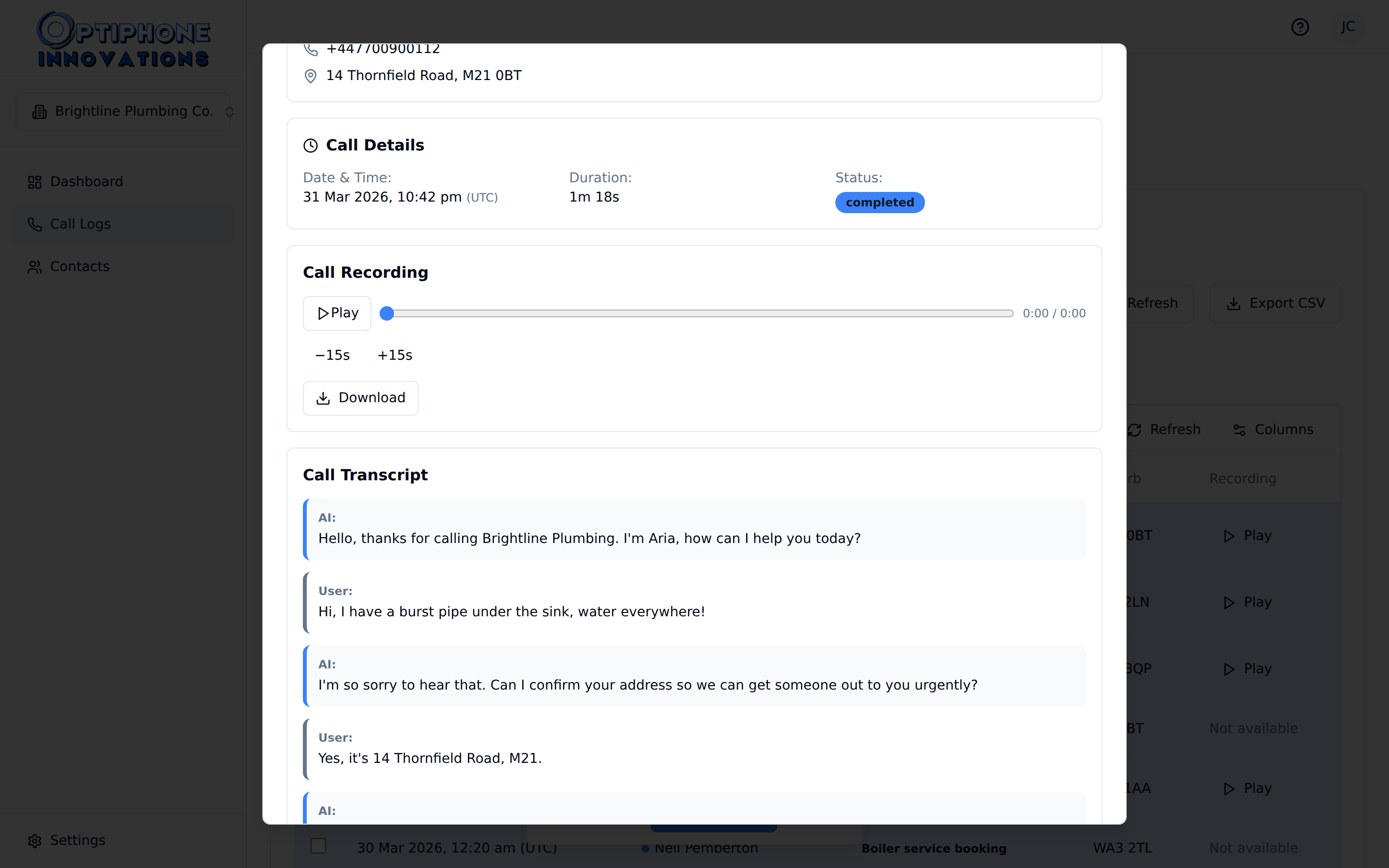
Recording and transcript
The prospect's actual words, not a summary of them.
Play the call back or read it. A coaching conversation goes differently when both of you are looking at what was said rather than remembering it.
Call logs
Every appointment, every read, in one list.
Filter by rep and the pattern shows up on its own. One bad call is a bad day. The same note six times is something to coach.